Infographic: Why the IMO and international shipping needs a strong revised Carbon Intensity Indicator (CII)
Infographic: Why the IMO and international shipping needs a strong revised Carbon Intensity Indicator (CII)

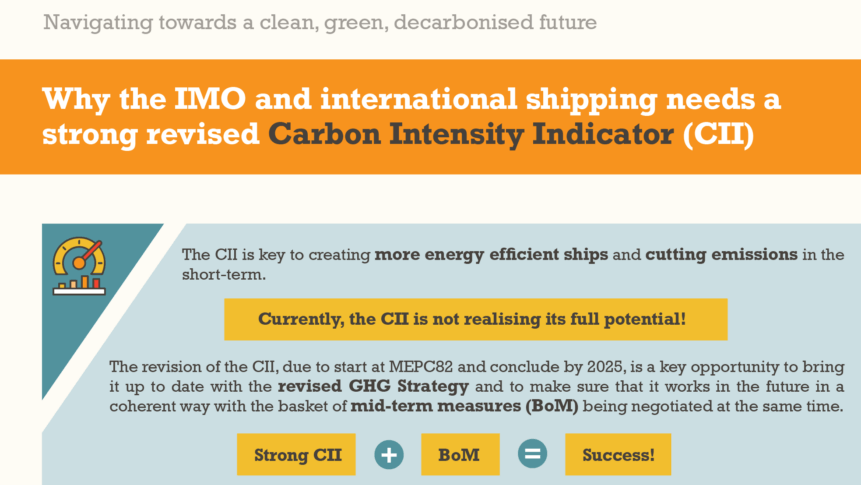
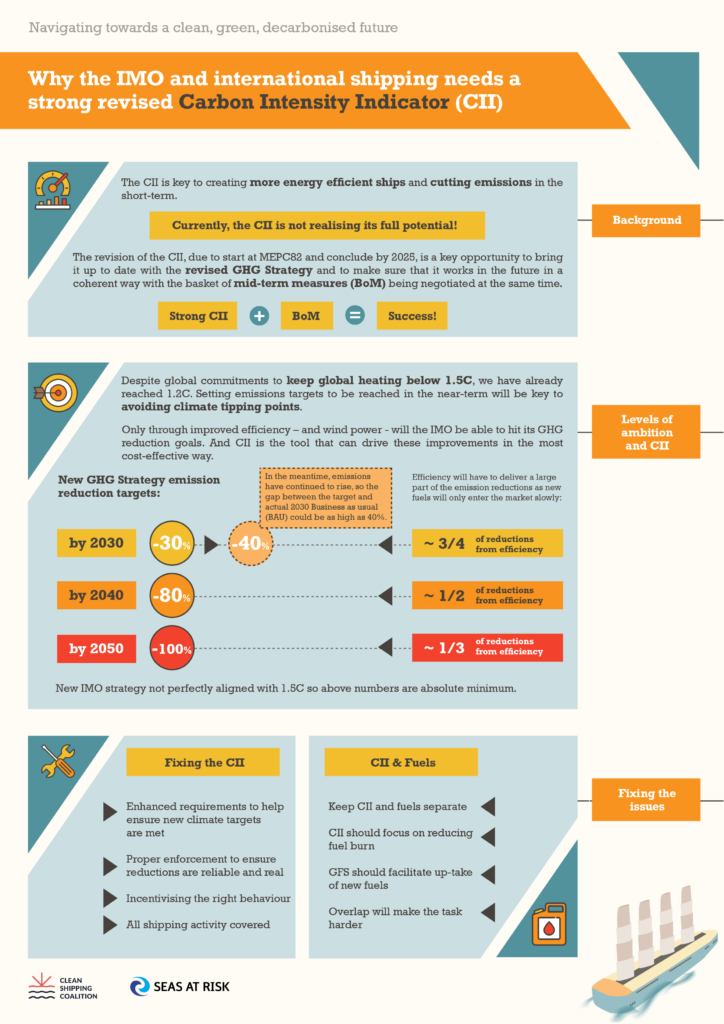
The CII is key to creating more energy efficient ships and cutting emissions in the short-term.

Currently, the CII is not realising its full potential!

The revision of the CII, due to start at MEPC82 and conclude by 2025, is a key opportunity to bring it up to date with the revised GHG Strategy and to make sure that it works in the future in a coherent way with the basket of mid-term measures (BoM) being negotiated at the same time.

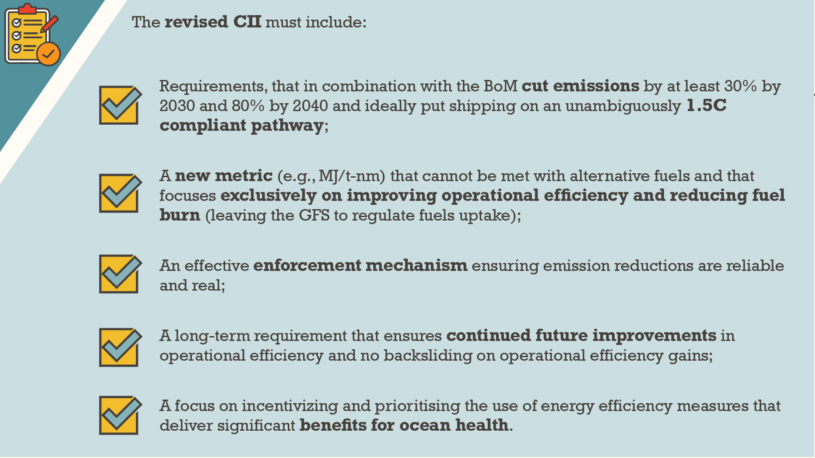
Despite global commitments to keep global heating below 1.5C, we have already reached 1.2C. Setting emissions targets to be reached in the near-term will be key to avoiding climate tipping points.

Only through improved efficiency – and wind power – will the IMO be able to hit its GHG reduction goals. And CII is the tool that can drive these improvements in the most cost-effective way.

Download the infographic: Why the IMO and international shipping needs a strong revised Carbon Intensity Indicator (CII)
Infographic: Why the IMO and international shipping needs a strong revised Carbon Intensity Indicator (CII)

Continue reading

Fully Loaded Cargo Ship on a Sea - Kelly, Pexels

In response to reports of alternative proposals to the IMO’s Net-Zero Framework, the Clean Shipping Coalition called on IMO member states to support the NZF so that the shipping industry can meet its own climate goals.

March 6, 2026
The Guardian: US ‘bullying’ could scupper carbon levy on shipping, warn experts

“The net zero framework [which underlies the carbon levy] may not be perfect, but it has the potential to grow into a set of rules that would allow the IMO and shipping industry to meet their climate and environmental justice commitments.”

February 26, 2026
Pexels/Pixabay

Opportunity Green, Environmental Defense Fund, One Planet Port, Pacific Environment, Clean Shipping Coalition, Seas at Risk, and ZESTAs call for a precautionary approach to managing toxic ammonia effluent from ammonia-fueled ships

February 13, 2026